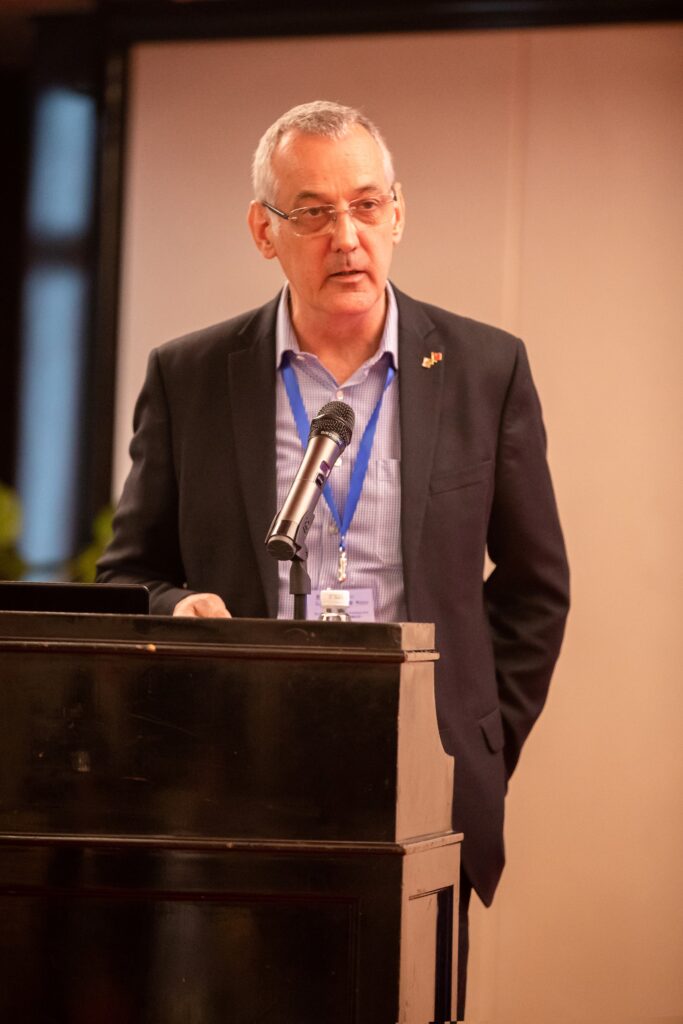
David Bergeron led refrigeration research at NASA’s Johnson Space Center, where his team worked on solar-powered heat pumps meant to cool a future lunar base. Out there, a battery is a liability: heavy, short-lived and hard to replace.
His answer was to store cold instead of electricity. The compressor runs straight off the solar panel while the sun is up and freezes a water-based phase-change material into a thermal “ice bank.” When the sun goes down, the ice bank keeps the cabinet cold. No battery, no charge controller.
In 1999 he licensed the technology and founded the company that became SunDanzer. The first battery-free unit went to NASA. The next ones went where the problem was real: rural clinics with no grid and no spare parts, where a warm fridge means wasted vaccines.
We still build every refrigerator around the same principle. Fewer parts that can fail, so health workers can spend their time on patients instead of equipment.
Today our next generation pairs that same phase-change ice bank with lithium batteries. A clinic needs a solar array about half the size, and the vaccines stay cold through cloudy stretches. Smaller systems, fewer parts that can fail, so health workers can spend their time on patients instead of equipment.